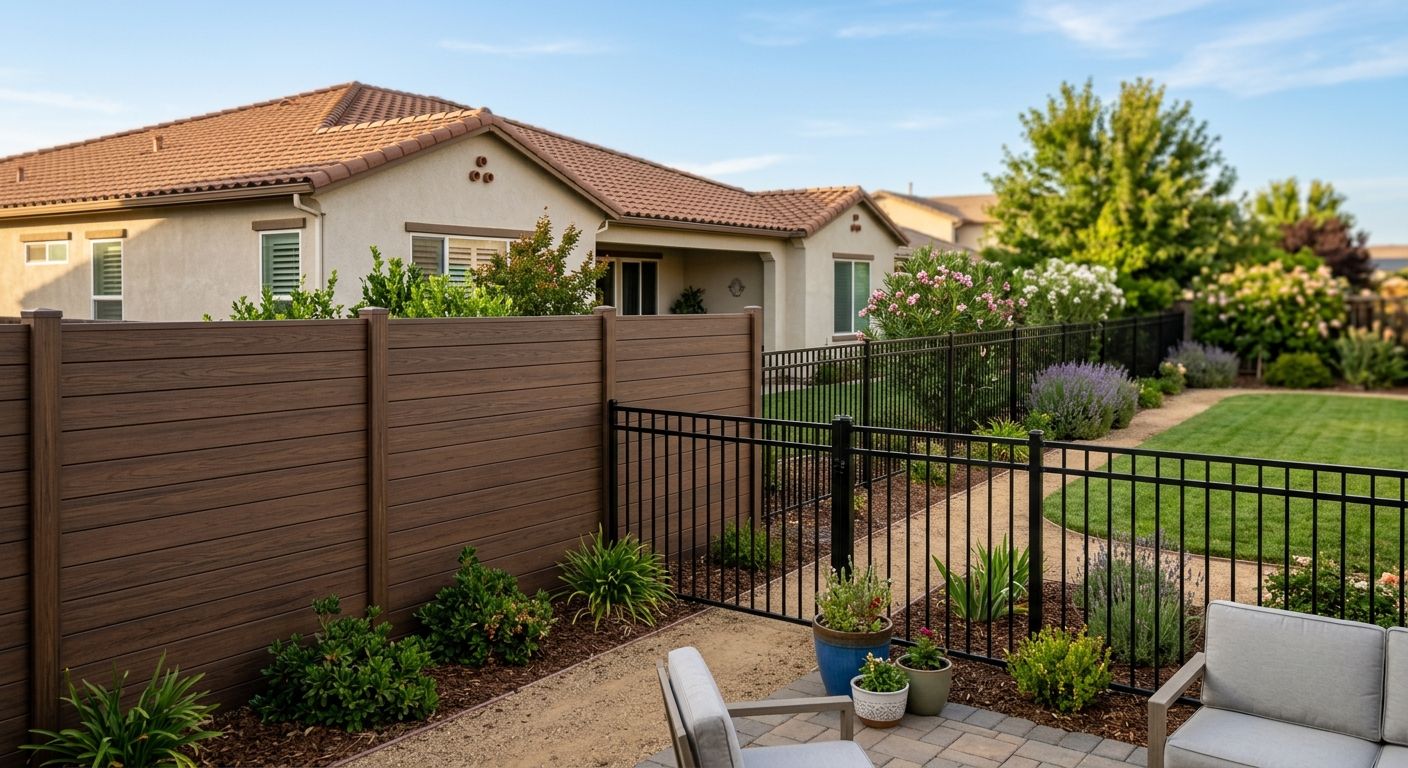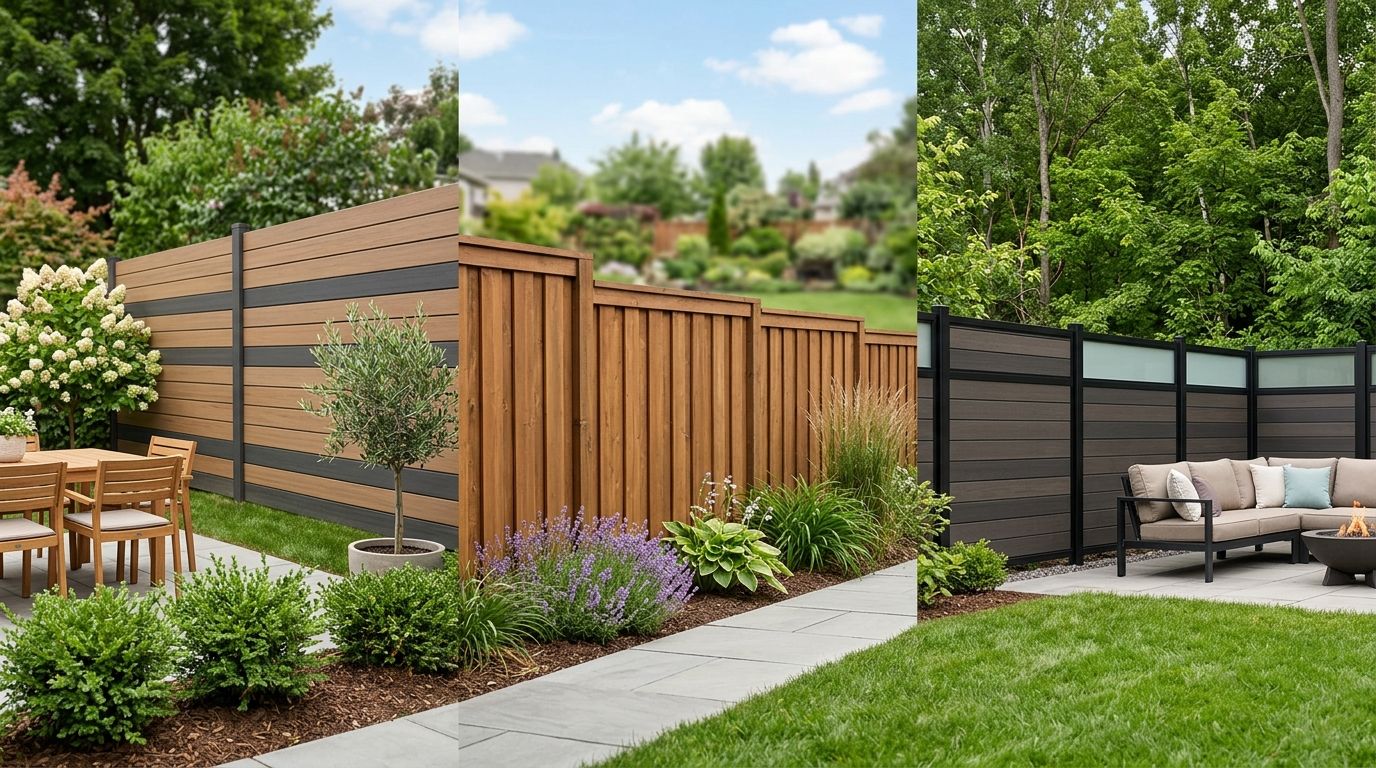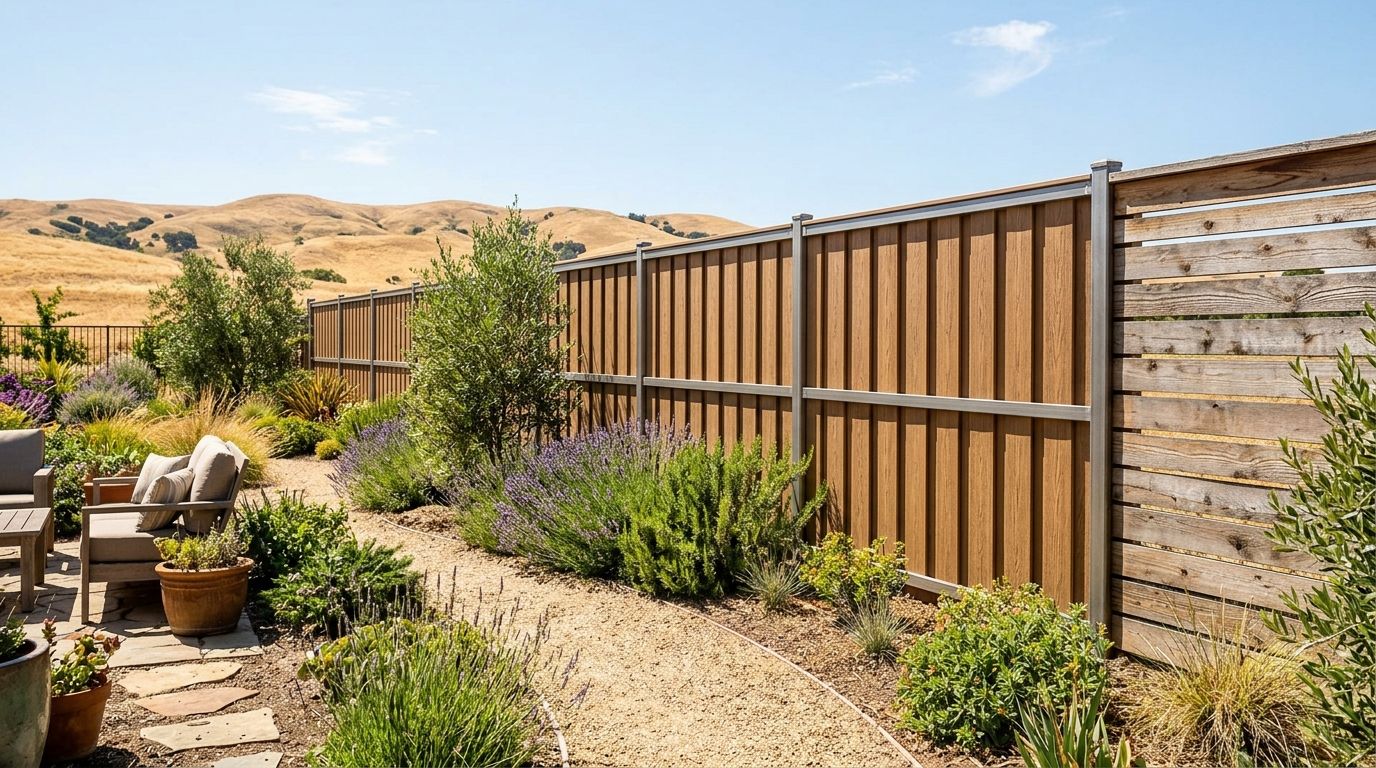
Wood, vinyl, chain link, wrought iron, and composite all show up in Central Valley yards, but only some of them survive a Modesto summer without warping, fading, or falling apart at the posts. This guide ranks the best fence materials for hot climate conditions in Modesto, Manteca, Turlock, and the surrounding valley for 2026, based on how each material actually handles triple-digit heat, dry wind, and year-round UV exposure.
- Cedar and redwood privacy fencing wins overall for Central Valley heat when posts are set deep and boards are stained regularly.
- Vinyl fencing is the best fence material for hot climate homeowners who refuse to repaint every few years.
- Chain link is the best budget option and shrugs off heat and wind, but it offers zero privacy.
- Wrought iron and aluminum resist warping completely but get too hot to touch and skip privacy entirely.
- Composite fencing costs more upfront but resists the cupping and splitting that wood eventually shows in extreme heat.
Why this matters
Modesto and Manteca summers regularly push past 100°F for weeks at a time, and that heat doesn't just make yard work miserable — it attacks fence materials directly. Wood expands and contracts with daily temperature swings, vinyl can soften and sag in direct afternoon sun, and metal fencing radiates stored heat well after sunset.
Central Valley wind adds a second stress. Gusts that funnel through the delta and up through Turlock and Ripon put lateral pressure on every post in the ground, and a fence that isn't engineered for that wind load loosens at the footings within a few seasons regardless of the material on top.
Getting the material choice right at California Crews starts with matching the fence to the climate, not just the budget. The rest of this guide breaks down which material wins for which situation.
What makes the best fence material for a hot climate
- UV resistance — how much the surface fades, chalks, or degrades under direct valley sun
- Thermal stability — how little the material expands, contracts, warps, or sags across a 100°F+ daily swing
- Wind load performance — how the material and post spacing hold up against sustained gusts
- Maintenance cycle — how often the fence needs staining, painting, or hardware checks
- Lifespan in heat — realistic years of service before boards, panels, or posts need replacement
- Privacy and airflow trade-off — whether the material blocks heat-radiating direct sun or lets air move through the yard
Central Valley fence materials at a glance
| Material | Best For | Standout Feature | Key Limitation |
|---|---|---|---|
| Cedar/redwood wood | Privacy and curb appeal | Natural insect and rot resistance | Needs periodic staining to fight sun damage |
| Vinyl | Low-maintenance homeowners | Never needs painting | Can soften or sag in direct, prolonged heat |
| Chain link | Budget-conscious buyers | Nearly immune to warping | No privacy, minimal curb appeal |
| Wrought iron/aluminum | Security with airflow | Zero warping, holds shape for decades | Surface gets hot to the touch, no privacy |
| Composite | Long-term low-maintenance privacy | Resists cupping better than raw wood | Higher material cost than wood or chain link |
1. Wood fencing (cedar or redwood): best for privacy and curb appeal in Central Valley heat
Cedar and redwood are the two wood species that hold up best against Central Valley sun and wind, and they're the backbone of most privacy and board-on-board fences installed across Modesto and Manteca. Both species carry natural oils that resist rot and insects better than pine, which matters more here than in milder climates because dry heat accelerates wood breakdown at the grain.
A properly built wood fence uses posts set at least 24 inches deep in concrete to resist wind uplift, with board spacing that allows slight seasonal movement instead of fighting it.
Wood fencing pros:
- Full privacy with no gaps once boards are installed tight
- Natural insect and rot resistance from cedar/redwood oils
- Can be stained or painted to match any home exterior
- Repairable board-by-board instead of full panel replacement
Wood fencing cons:
- Requires staining or sealing every few years to fight UV fading and cracking
- Boards can cup or warp if wood isn't properly kiln-dried before install
- Higher maintenance commitment than vinyl or metal over the fence's life
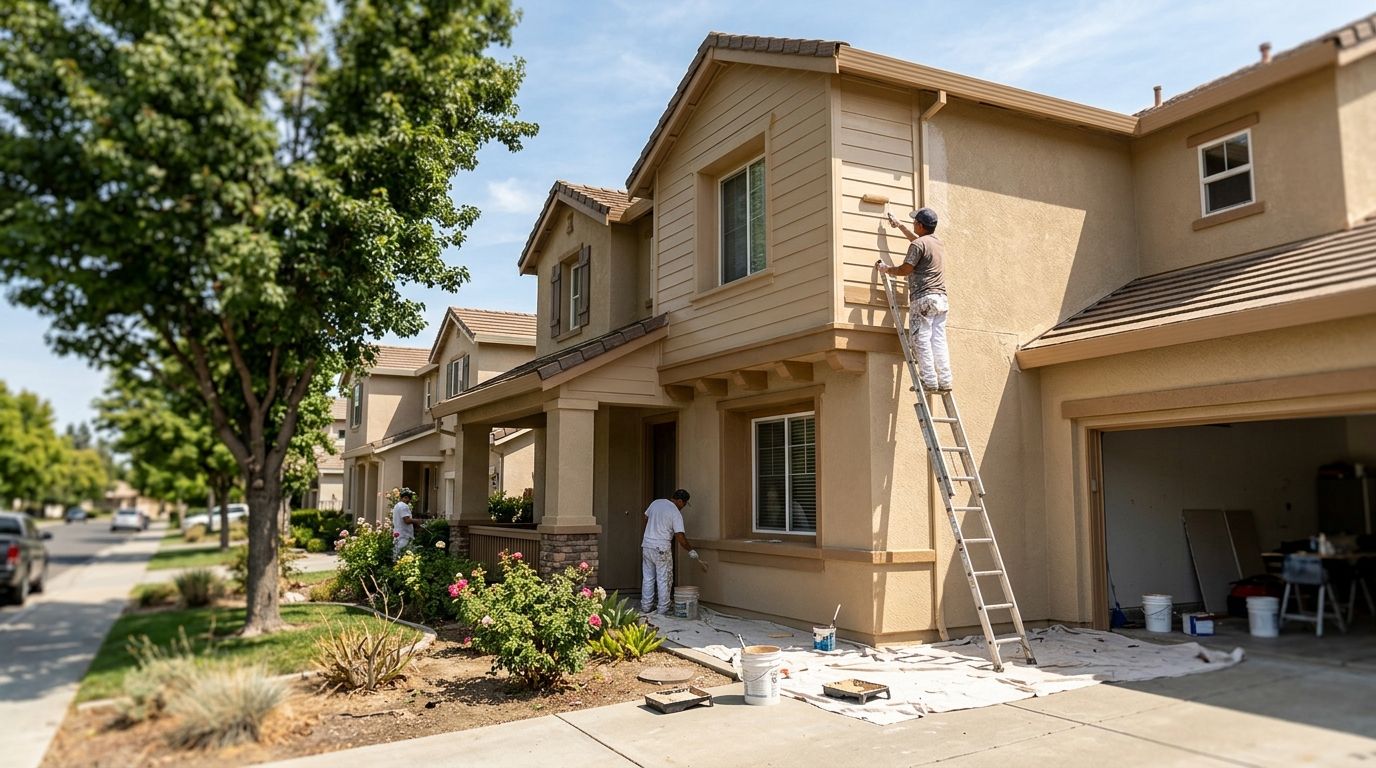
Best for: homeowners who want full privacy and are willing to stain or reseal on a regular schedule. Keeping the wood sealed matters as much as the species — the same UV and wind exposure that fades exterior siding wears down fence boards, and homeowners planning a full exterior refresh often check the cost to paint a house exterior in Modesto alongside fence staining to time both projects together.
Verdict: Buy for privacy-focused yards where you're willing to maintain the finish.
2. Vinyl fencing: best for low-maintenance homeowners in hot climates
Vinyl fencing skips the staining cycle entirely, which is the single biggest reason homeowners switch to it in the Central Valley. There's no wood grain to crack, no oil finish to reapply, and no insect vulnerability to worry about season after season.
The trade-off shows up in extreme, sustained heat. Dark-colored vinyl panels can soften slightly during the hottest afternoon hours, and lower-grade vinyl can sag between posts over many summers if the panels weren't reinforced at manufacture.
Vinyl fencing pros:
- Never needs painting or staining
- Resists rot, insects, and splintering completely
- Colorfast options resist fading better than raw wood
- Cleans with a hose instead of sanding and resealing
Vinyl fencing cons:
- Lower-grade panels can soften or sag in extreme, sustained heat
- Limited repair options — damaged panels usually need full replacement, not board-by-board fixes
- Fewer natural, custom-stain finish options than wood
Best for: homeowners who want privacy fencing without a recurring maintenance schedule.
Verdict: Buy if avoiding maintenance matters more than custom wood staining options.
3. Chain link fencing: best budget option for hot climate durability
Chain link is close to immune to the specific ways heat destroys other fence materials. There's no wood to warp, no vinyl to soften, and no painted surface to fade — galvanized or vinyl-coated wire holds its shape through decades of Central Valley summers with almost no maintenance beyond checking tension and hardware.
What it doesn't do is block a single thing. No privacy, no wind screening, and limited curb appeal compared to wood or vinyl privacy fencing.
Chain link pros:
- Extremely resistant to heat warping and wind damage
- Lowest maintenance of any fence material on this list
- Allows full airflow through the yard, which matters in extreme heat
- Long service life with minimal upkeep
Chain link cons:
- No privacy whatsoever
- Limited curb appeal for front-facing property lines
- Doesn't block wind-driven dust the way a solid fence does
Best for: side yards, dog runs, and property lines where privacy isn't the priority and budget or durability is.
Verdict: Buy for utility fencing; Skip if privacy is the goal.
4. Wrought iron or ornamental aluminum: best for security with airflow
Metal fencing holds its shape through heat and wind better than any material on this list — there's no expansion cycle dramatic enough to warp a properly welded panel. Ornamental aluminum has largely replaced true wrought iron in residential installs because it resists rust without the same maintenance burden.
The surface temperature is the real issue in Central Valley summers. Dark powder-coated metal absorbs heat directly and can get uncomfortably hot to the touch by mid-afternoon, and like chain link, it offers no privacy.
Wrought iron/aluminum pros:
- Zero warping or sagging, even after decades of heat cycles
- Strong security and containment for pools or front entries
- Low maintenance once properly coated against rust
- Allows airflow and sightlines through the yard
Wrought iron/aluminum cons:
- No privacy or wind blocking
- Dark finishes get hot to the touch in direct summer sun
- Higher installation complexity for custom gate hardware
Best for: front-yard security, pool enclosures, and properties where sightlines matter more than privacy.
Verdict: Buy for security-focused installs; Skip if full privacy is required.
5. Composite fencing: best for long-term low-maintenance privacy
Composite fencing blends wood fiber with polymer, which gives it the look of a wood privacy fence with meaningfully better resistance to the cupping and splitting that raw wood shows after several Central Valley summers. It doesn't need staining and holds color longer than most vinyl.
Composite material costs more than wood or chain link, and panel repairs are less flexible than board-by-board wood repairs — damaged sections often require replacing a full panel.
Composite pros:
- Resists warping and cupping better than raw wood in extreme heat
- No staining or painting required
- Holds color and finish longer than most vinyl products
- Full privacy with a natural wood-grain appearance
Composite cons:
- Higher material investment than wood or chain link
- Panel-based repairs instead of board-by-board fixes
- Fewer custom-stain options than natural wood
Best for: homeowners who want a wood look with less long-term upkeep and are comfortable with a higher upfront investment.
Verdict: Hold — a strong option if the higher material cost fits the budget; wood remains the better value pick otherwise.
“A fence that can't handle 100°F afternoons and sustained valley wind isn't built for Modesto — it's built for somewhere else.”
How this ranking was built
Each material was weighed against the same six criteria: UV resistance, thermal stability, wind load performance, maintenance cycle, realistic lifespan in heat, and the privacy-versus-airflow trade-off. Wood ranks first because it balances privacy and repairability, even though it demands the most upkeep. Materials that block zero privacy — chain link and metal — rank by use case instead of head-to-head against privacy fencing, since they're solving a different problem entirely.
Get a fence material recommendation
Talk through wood, vinyl, or composite options for your property before you commit.
Which fence material should you choose?
If privacy and curb appeal matter most, cedar or redwood wood fencing is the best fence material for hot climate yards in 2026, as long as you commit to a staining schedule every few years. If you want privacy without the maintenance, vinyl is the better fit. If the fence line doesn't need privacy at all — a side yard, dog run, or pool enclosure — chain link or aluminum wins on durability and cost per year of service. Composite sits between wood and vinyl for homeowners who want a wood look with less long-term work and can absorb the higher material cost.
FAQ
What is the best fence material for hot climate conditions in the Central Valley?
Cedar or redwood wood fencing is the best overall choice for Central Valley heat when boards are properly stained and posts are set at least 24 inches deep. Vinyl is the better pick if you want to skip the staining schedule entirely.
Does vinyl fencing warp in extreme heat?
Lower-grade vinyl can soften or sag during sustained 100°F+ afternoons, especially in dark colors. Higher-grade, reinforced vinyl panels hold their shape through Central Valley summers with minimal issue.
How long does a wood fence last in Modesto heat?
A cedar or redwood fence with proper post depth and regular staining typically lasts many years longer than an unmaintained fence, since UV exposure and dry heat are what break wood down fastest, not age alone.
Is chain link a good fence for hot climates?
Chain link handles heat and wind better than almost any other material since there's no surface to warp or fade. It offers zero privacy, so it works best for side yards, dog runs, or property lines where privacy isn't the priority.
Does wood or vinyl hold up better in Central Valley wind?
Both hold up well with proper post spacing and depth, but vinyl panels distribute wind load differently than individual wood boards. A contractor should size post spacing to your specific fence height and local wind exposure.
Do metal fences get too hot to touch in summer?
Dark powder-coated wrought iron or aluminum fencing can get uncomfortably hot to the touch by mid-afternoon in direct summer sun. Lighter finishes reduce this, but metal fencing still radiates more surface heat than wood, vinyl, or composite.
Is composite fencing worth it over wood in hot climates?
Composite resists cupping and splitting better than raw wood over many hot summers and skips the staining cycle entirely. It costs more upfront than wood, so it's worth it mainly for homeowners prioritizing long-term low maintenance.
What wood species holds up best in Central Valley heat?
Cedar and redwood outperform pine in Central Valley conditions because their natural oils resist insects and rot better under sustained heat and dry air. Both need periodic staining to protect against UV fading and cracking regardless of species.
One last thing
The detail most homeowners miss isn't the wood species — it's post depth. A fence built to handle Modesto's wind gusts needs posts set deep enough in concrete to resist lateral movement, and a shallow-set post will loosen years before the boards on top show any wear from the heat.
Wood fencing installed and stained correctly for Central Valley conditions in 2026 still outperforms most low-grade vinyl on pure lifespan, even with the added maintenance. The maintenance is the cost of the privacy and repairability wood gives you — that trade-off is the whole decision.